

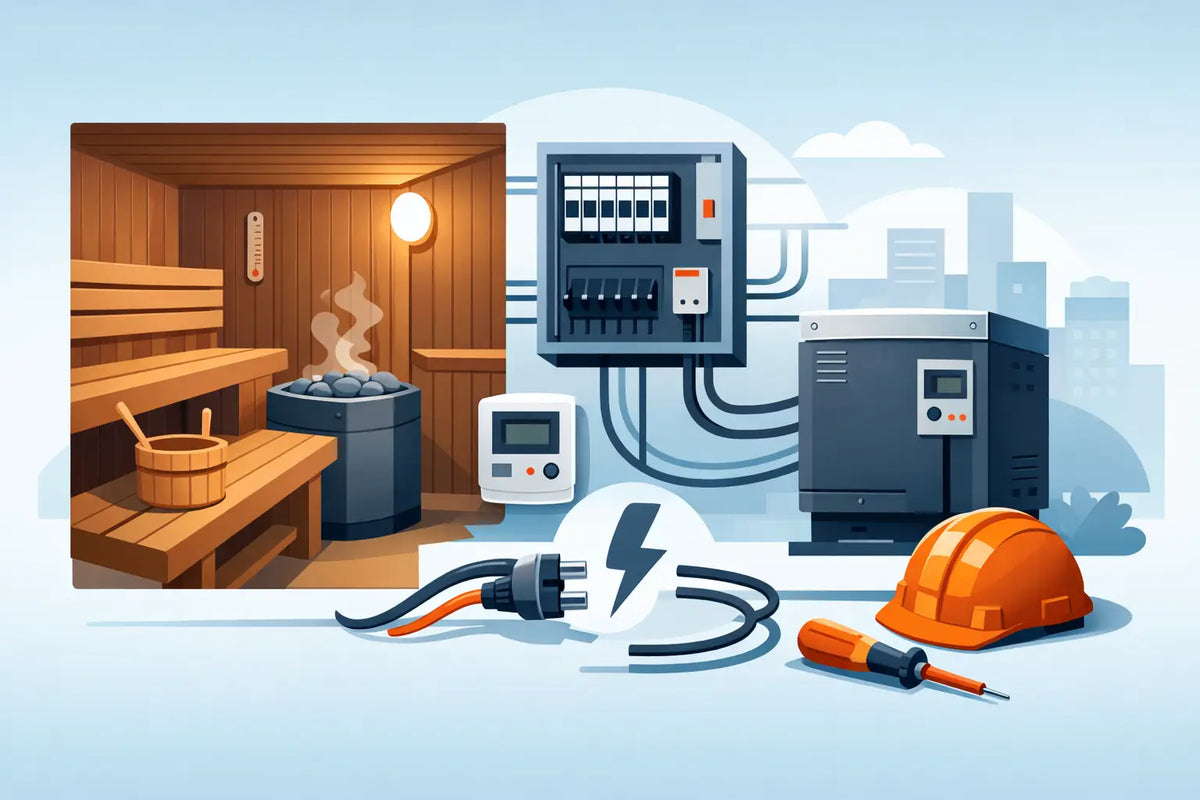
Commercial Sauna Electrical Requirements
A commercial sauna should feel effortless for every guest, member, or client. That experience begins well before the first session, with electrical planning that supports dependable heat, safe operation, and a refined finish. Commercial sauna electrical requirements are not a detail to solve after the room is designed. They shape the heater you can select, where controls can live, how quickly the sauna reaches temperature, and whether the installation passes inspection without costly changes.
For a performance facility, spa, hospitality space, or luxury wellness residence with frequent use, the right approach is simple: select the sauna first, confirm its manufacturer specifications, then have a licensed electrician design the installation around the equipment and the local code authority. A premium sauna is a long-term wellness asset. Its electrical infrastructure should be built to the same standard.
Commercial Sauna Electrical Requirements Start With the Heater
The heater is the primary electrical load, and its data plate is the authority. It identifies the required voltage, phase, wattage, breaker size, conductor requirements, and whether the unit must be hardwired. Those details should guide every decision that follows.
Most traditional commercial sauna heaters operate on 240 volts, although 208-volt versions are common in commercial buildings. This distinction matters. A heater designed for 240 volts may produce less heat when supplied with 208 volts unless the manufacturer specifically approves that configuration. In a busy club or studio, reduced output can mean longer heat-up times and an experience that falls short of expectations.
Larger heaters may require single-phase or three-phase power. Three-phase service can be especially practical in commercial environments because it distributes a significant load more evenly across the building's electrical system. It is not automatically the better choice, however. The correct configuration depends on the service already available, the heater listing, the room size, and the facility's total load calculation.
Infrared commercial saunas typically use less power than traditional rock-heater models, but they still require dedicated, code-compliant circuits. Some compact infrared units may use 120-volt power, while larger professional models often require 240 volts. Never assume that a standard receptacle is adequate simply because an infrared sauna operates at a lower temperature.
Plan a Dedicated Circuit and Real Electrical Capacity
A commercial sauna heater should be supplied by a dedicated circuit sized specifically for that appliance. It should not share a circuit with lighting, receptacles, HVAC equipment, cold plunge equipment, or other recovery tools. Dedicated power protects performance and helps prevent nuisance tripping when the facility is active.
The breaker and wire size must match the sauna manufacturer's installation manual and the applicable National Electrical Code requirements, as adopted and amended by the local jurisdiction. An electrician will account for the heater's nameplate rating, continuous-load considerations where applicable, conductor temperature ratings, conduit fill, run length, and any required derating. These are not areas for estimation.
Before ordering a high-output sauna, confirm that the electrical panel has enough available capacity. A single sauna may be manageable in an established wellness space, while a full recovery suite with multiple saunas, plunge chillers, red light systems, laundry equipment, and HVAC can push an existing service close to its limit. Upgrading a panel, feeder, or electrical service is far easier to plan into a project than to discover during final installation.
Why 208 Volts Versus 240 Volts Deserves Attention
Commercial properties often have 208Y/120-volt service, while many homes use 240/120-volt split-phase service. The numbers look close, but a resistance heater's output is affected by voltage. A 240-volt heater operated at 208 volts can deliver meaningfully less power if it is not designed for that supply.
Ask for the exact voltage and phase available at the intended installation location. Then select a heater configured and listed for that service. This protects the sauna's heat-up performance and avoids informal field modifications that can compromise warranty coverage, inspection approval, and safety.
Controls, Disconnects, and Safe Placement
Commercial sauna controls need to be accessible, intuitive, and installed where heat and moisture will not damage them. Many traditional systems use an exterior wall-mounted control panel or a remote control assembly located outside the sauna room. This keeps settings convenient for staff while protecting sensitive components from the harshest interior conditions.
A properly located disconnecting means is also essential. Depending on the heater, local code, and installation method, a disconnect may be required within sight of the equipment or another approved location. Your electrician and inspector can confirm what applies to the project. The goal is straightforward: service personnel must be able to safely isolate the sauna heater before maintenance.
Commercial use also benefits from controls with practical operating limits. Timers, automatic shutoff functions, temperature limits, and remote-start safeguards can support a consistent guest experience without leaving equipment energized longer than intended. If remote operation is part of the plan, verify that the heater and control system are listed for it and that all safety requirements are met.
The Sauna Interior Is Not a Standard Electrical Environment
High heat, humidity, and occasional water exposure create conditions that demand careful material selection and placement. Electrical boxes, fixtures, wiring methods, and penetrations inside or near the sauna must be suitable for their environment and installed according to the sauna manufacturer's instructions.
Lighting is a common example. A beautiful low-profile fixture can elevate the atmosphere, but it must be rated for the temperature and location in which it will operate. Fixtures, lenses, trim, and wiring inside a hot room can degrade prematurely if they are not designed for the heat. Any lighting placement should also respect the heater's required clearances and avoid creating a touch hazard for users.
Receptacles generally do not belong inside a traditional sauna room. If nearby receptacles are needed for cleaning or service, their location and ground-fault circuit interrupter protection should be determined by the electrician under the applicable code. Extension cords and plug-in workarounds have no place in a commercial sauna installation.
Clearances Protect More Than the Finish
Heater clearance requirements are both electrical and fire-safety requirements. The manufacturer will specify minimum distances from benches, walls, guards, ceilings, and combustible materials. A custom millwork plan that looks exceptional on paper can become unsafe if it crowds the heater or blocks airflow around it.
Coordinate the sauna designer, electrician, carpenter, and mechanical contractor before walls are closed. The team should know where the heater will sit, where wiring enters the room, where controls mount, how ventilation is routed, and which service clearances must remain available. This coordination is especially valuable in tight luxury builds, where every visible detail matters.
Permits, Inspections, and Commercial Compliance
Most commercial sauna installations require an electrical permit and inspection. In many jurisdictions, building, mechanical, plumbing, and fire-review requirements may also apply, particularly for a new wellness suite or a sauna added to a business open to the public. Requirements can differ between cities and counties, so the local authority having jurisdiction has the final word.
The sauna itself should be a listed product intended for the use and installation environment. Commercial operators should retain the heater manual, product specifications, electrical drawings, permit records, and inspection approvals. This documentation supports maintenance, insurance discussions, future renovations, and a smoother handoff when the property changes ownership.
For facilities with staff, establish a simple operating protocol after commissioning. Team members should know the control system, normal heat-up behavior, emergency shutoff location, cleaning boundaries, and the signs that call for service. A heater that trips its breaker, struggles to reach temperature, emits unusual odors, or shows damaged wiring should be taken out of service until a qualified professional evaluates it.
A Better Pre-Installation Conversation
Before finalizing a commercial sauna purchase, provide your electrician and project team with the proposed model, heater kilowatt rating, voltage and phase options, location, panel information, and a list of nearby recovery equipment. Ask them to confirm available capacity, circuit routing, disconnect requirements, permit scope, and any site constraints that could affect the installation.
This is where consultative guidance adds real value. Corelux Wellness helps customers align premium recovery equipment with the practical realities of their space, so the sauna selected supports the experience they want to create rather than forcing compromises later.
The strongest commercial sauna projects do not treat electrical work as hidden infrastructure. They treat it as the foundation for reliable heat, polished design, and daily restoration. Bring a licensed electrician into the conversation early, honor the manufacturer's specifications, and your wellness space can deliver the calm, high-performance ritual people return for.