
How to Clean a Cold Plunge and Keep It Clear
A cold plunge should feel like a private reset: cold, clear, quiet, and ready when your training day or workday calls for it. Learning how to clean a cold plunge protects that experience. It also helps protect the finish, filtration system, chiller, and water quality of an investment designed to support recovery for years.
The best approach is not an aggressive deep clean every few days. It is a disciplined maintenance rhythm: remove what enters the water, keep sanitation in range, clean the circulation components on schedule, and drain the system before buildup has a chance to affect performance. The exact routine depends on whether your plunge is used by one person at home or serves a busy training studio, but the principles remain the same.
Start With the Manufacturer's Care Instructions
Before adding chemicals or opening a filter housing, review the operating manual for your specific cold plunge. Premium systems can differ substantially in their plumbing layout, filter type, sanitation method, surface material, and approved cleaning products. A cleaner that is harmless on an acrylic shell may not be appropriate for a stainless steel tub, natural wood surround, insulated liner, or sensitive chiller components.
Use only water-treatment products and filter replacements compatible with your system. This matters especially if your cold plunge uses ozone, UV sanitation, a built-in dosing system, or a cartridge filter with a particular micron rating. Do not assume that a product made for a swimming pool is suitable for a compact, temperature-controlled plunge.
If your system is under warranty, following its stated maintenance schedule is part of protecting that coverage. It also makes routine care simpler because you have a clear baseline for water chemistry, filter service, and drain intervals.
Keep Contaminants Out Before They Reach the Water
The most refined maintenance routine begins before you step in. Rinsing off sweat, body lotion, deodorant residue, hair products, and dirt with a quick shower reduces the workload on your filter and sanitizer. This is particularly valuable after a hard training session, sauna session, or outdoor workout, when skin and clothing can carry more oils and debris.
A fitted cover is equally useful. Keep it on whenever the plunge is not in use to limit dust, pet hair, leaves, and airborne particles. For outdoor installations, the cover also reduces evaporation and helps maintain stable water temperature. A clean recovery space is easier to preserve than restore.
For shared commercial or family use, establish a simple pre-plunge standard: shower first, enter in clean swimwear or without clothing according to your setting, and avoid oils or topical products immediately beforehand. The more users a system has, the more this small habit matters.
The Daily and Weekly Cold Plunge Cleaning Routine
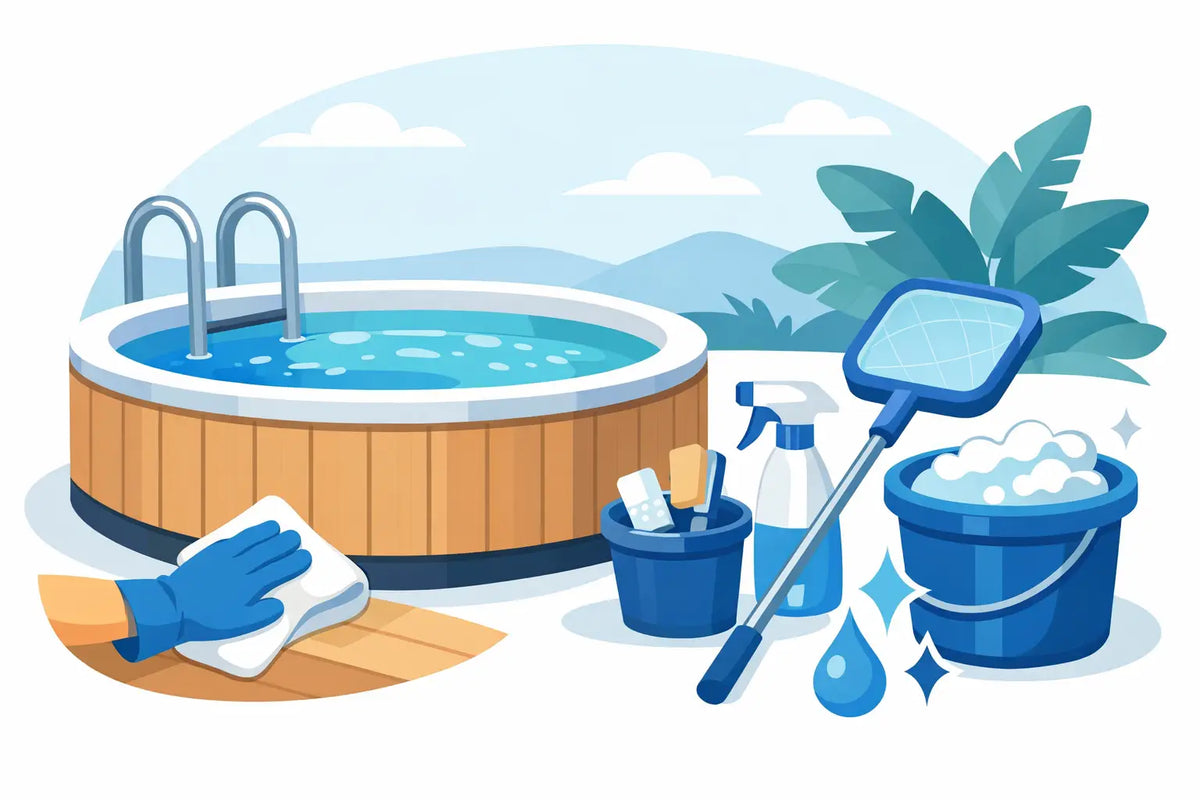
Daily upkeep takes only a few minutes and keeps small issues from becoming a full maintenance project. Check the water visually before use. It should look clear and smell neutral or lightly treated, never musty, sour, or overly chemical. Skim out visible debris with a clean net, wipe away a waterline ring with a soft microfiber cloth, and confirm that circulation is operating normally.
Test water chemistry according to the sanitation method specified for your system. Most cold plunges rely on a sanitizer such as chlorine or bromine, sometimes supported by ozone or UV. Those supplemental systems can reduce sanitizer demand, but they do not automatically eliminate the need to test and maintain the water. Cold water can create the impression that water stays fresh indefinitely. In reality, oils, skin cells, and contaminants still accumulate.
At least once a week, inspect the filter and rinse it if the manufacturer allows. Turn off the unit first, then remove the cartridge carefully and rinse from the inside outward with a gentle stream of water. This helps release trapped debris without pushing it deeper into the filter media. Avoid high-pressure spraying, which can damage pleats and shorten the filter's usable life.
Also wipe the exterior, cover, controls, and surrounding floor. A soft cloth with a mild, manufacturer-approved cleaner is usually enough. Avoid abrasive pads, harsh degreasers, and unapproved solvents. Premium equipment deserves maintenance that preserves its finish rather than merely making it look clean for the moment.
How to Clean a Cold Plunge During a Full Water Change
A full drain and clean is the point at which you refresh both the water and the system itself. The ideal timing depends on bather load, filtration, sanitation, and whether users shower before entering. A lightly used home plunge may go several weeks between water changes. A shared athletic facility or wellness studio may need to drain and refresh far more often.
Drain sooner if the water becomes cloudy, develops a persistent odor, feels slippery on the walls, foams unusually, or requires increasingly large chemical adjustments to stay in range. These are signs that dissolved contaminants are outpacing the system's ability to manage them.
Follow this process for a thorough reset:
1. Turn off and unplug the system if the manual directs you to do so. Never service electrical or circulation components while the unit is running.
2. Drain the water through the designated drain valve or pump, directing it only to an appropriate drainage location. Check local requirements and your manufacturer's guidance before draining treated water outdoors.
3. Remove the filter. Rinse or soak it with a filter-specific cleaner if it is still within its service life, or replace it if it is worn, discolored, damaged, or no longer rinses clean.
4. Wipe the empty shell, seats, floor, and waterline with a soft cloth and an approved nonabrasive cleaner. Pay close attention to corners, jets, fittings, and the area around the drain.
5. Rinse all cleaner residue away thoroughly. Leftover cleaning products can affect water chemistry, create foam, or irritate skin once the plunge is refilled.
6. Reinstall the filter, close the drain, refill with fresh water, and restart circulation according to the system instructions. Balance the water and add sanitizer only after the unit has reached the recommended operating level.
Never mix chemicals together, and never add water to concentrated chemicals. Add each product separately to circulating water in the order and quantity recommended by the manufacturer. Store chemicals in a cool, dry area away from direct sunlight, children, and incompatible products.
Give the Filter and Chiller the Attention They Deserve
The shell is what you see. The filter and chiller are what preserve the experience. When either one is neglected, water can lose clarity, cooling efficiency can decline, and the system may work harder than necessary.
Replace filters at the interval recommended for your model, even if they do not look severely dirty. A filter can retain oils and fine particles that are not obvious at a glance. For high-use environments, keeping a spare filter on hand prevents maintenance from interrupting your recovery schedule.
Do not pour cleaning chemicals into vents, equipment bays, or directly onto the chiller. Keep the area around the equipment compartment dry, ventilated, and free of stored towels, leaves, or dust buildup. If you notice reduced water flow, unusual noise, error messages, inconsistent cooling, or a leak, stop guessing. Consult the manufacturer or a qualified service professional before the issue becomes more expensive to resolve.
Adjust the Routine for How You Use Your Plunge
There is no single drain schedule that fits every owner. A solo user who showers first, keeps the plunge covered, and maintains water chemistry may require less frequent water changes than a household with several daily users. A performance facility with athlete turnover needs a more conservative schedule, closer testing, and documented maintenance practices.
Water temperature also affects the routine in a practical way. Colder water can slow some microbial activity, but it does not make sanitation optional. Conversely, if a system is turned off or allowed to warm for an extended period, test the water before returning to use and consider a full refresh if its condition is uncertain.
For a luxury home wellness space, consistency is the real advantage. A short weekly appointment with your cold plunge preserves the clean visual standard of the room and ensures your recovery ritual is never delayed by avoidable maintenance. Corelux Wellness views this kind of care as part of owning professional-grade equipment with confidence.
A well-maintained cold plunge does more than look pristine. It creates the conditions for a more dependable ritual - step in, breathe, recover, and return to the rest of your day knowing your wellness space is working as intentionally as you are.