
Cold Plunge Chiller vs Ice: Which Is Worth It?
A cold plunge should feel like a deliberate part of your recovery ritual, not a last-minute logistics project involving melting bags, wet floors, and a race against rising water temperature. The cold plunge chiller vs ice decision comes down to more than initial cost. It determines how often you use the tub, how controlled the experience feels, and how well the system fits into the space you have created for recovery.
For someone taking an occasional cold soak after a hard training session, ice can be a perfectly practical starting point. For a household, a serious athlete, or a facility where cold immersion is part of the weekly routine, a dedicated chiller can turn a demanding habit into a refined, repeatable experience.
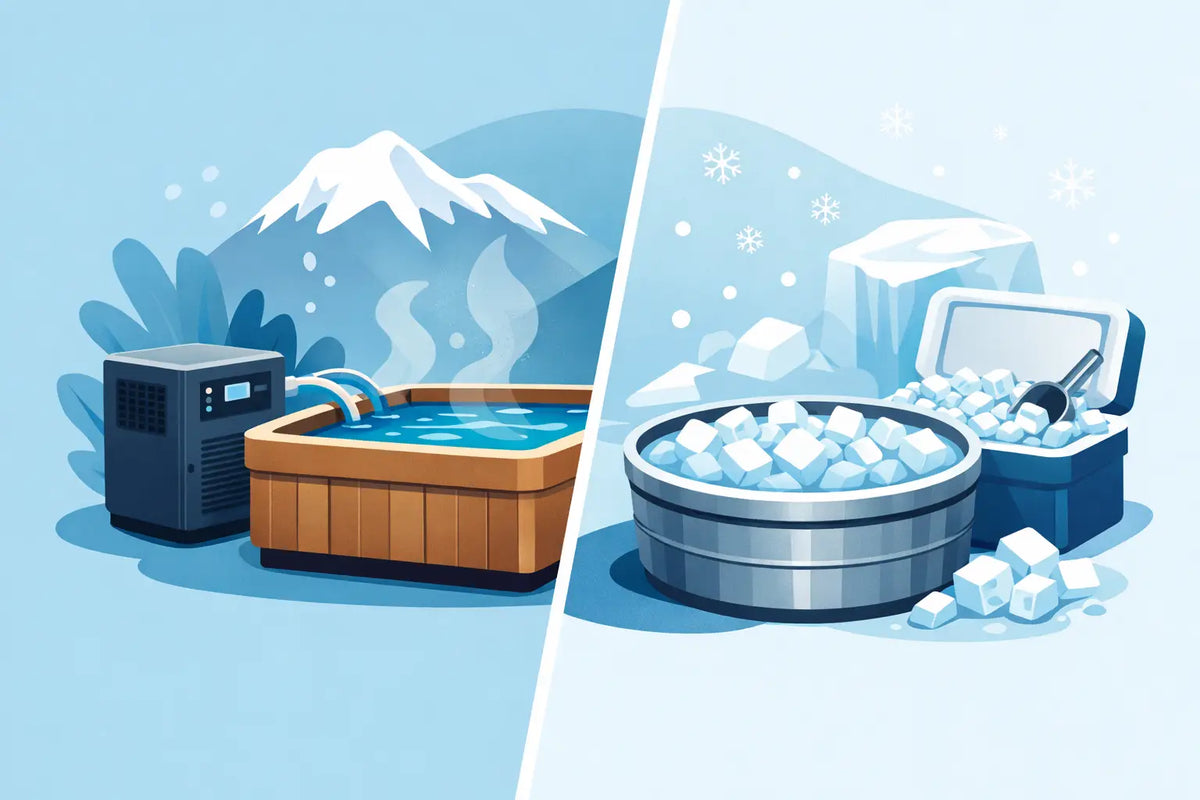
Cold Plunge Chiller vs Ice: The Core Difference
Ice cools water in batches. You fill the tub, add ice, wait for it to lower the temperature, use the plunge, then repeat the process for the next session. A chiller circulates water through a cooling unit and maintains a selected temperature over time, often with filtration and sanitation components built into the overall system.
That difference may sound straightforward, but it changes the entire ownership experience. Ice asks for recurring effort before every session. A chiller asks for a larger upfront investment, appropriate installation, and basic ongoing maintenance, then rewards you with water that is ready when you are.
Neither approach is automatically better for every buyer. The right choice depends on frequency of use, climate, water volume, available power, and how much you value precision and convenience.
Temperature consistency
A chiller gives you meaningful control over water temperature. This matters because a few degrees can dramatically change how a plunge feels, particularly when you are using cold immersion several times per week. Rather than guessing whether the latest ice load has brought the water down far enough, you can set a target that suits your tolerance, training schedule, and preferences.
Ice produces less predictable results. The final temperature depends on the starting water temperature, the amount and form of ice, the size and insulation of the tub, the outdoor weather, and how long the water sits before use. In summer, especially in warm regions, the same number of bags may barely make a dent in a large volume of water. In winter, it may take far less.
For those building a consistent performance routine, repeatability is a real advantage. It lets the equipment support the ritual instead of adding variables to it.
Daily convenience
The convenience gap becomes clear after the excitement of a new cold plunge wears off. Purchasing, lifting, transporting, and breaking up ice takes time. A typical plunge can require dozens of pounds of ice, and larger tubs or warmer starting water may require considerably more. That can be manageable once a week. It becomes tedious when several family members use the tub or when post-training immersion is part of a near-daily schedule.
A properly sized chiller eliminates that recurring errand. You may still need to top off water, monitor water quality, clean filters, and follow the manufacturer’s maintenance instructions. But the system does the cooling work in the background. Step outside after a demanding day, finish a workout, or open your recovery room before bed, and the water is already at its intended temperature.
That kind of readiness is often what makes a premium wellness investment worthwhile. Equipment that is easy to use tends to become equipment that is used.
The Real Cost of Ice and a Chiller
Ice has a lower barrier to entry. If you already own a durable tub and only plan to plunge occasionally, buying ice may cost far less than purchasing a chiller system. It also allows you to test whether cold immersion genuinely fits your lifestyle before committing to a more permanent setup.
The ongoing expense deserves an honest look, though. Regular ice purchases add up quickly, particularly for larger plunges, warm-weather use, or multi-user environments. There is also the cost of time: store runs, carrying bags, managing runoff, and planning your session around preparation. For a busy executive, a committed athlete, or a studio owner, convenience has value beyond the receipt total.
A chiller carries the greater upfront cost and uses electricity. It may also require accessories, plumbing considerations, or professional guidance depending on the model and installation location. Yet over years of regular use, it can offer stronger long-term value than repeatedly purchasing ice, while delivering a more polished experience.
The practical question is not simply, “Which is cheaper?” Ask, “What will this routine cost me in money, time, and friction over the next three years?”
Do not overlook water quality
Cooling water and keeping water clean are related, but they are not the same task. Ice does not replace filtration or sanitation. If you are reusing water, particularly in a shared household or professional setting, you need a clear water-care routine appropriate to your tub and its manufacturer guidelines.
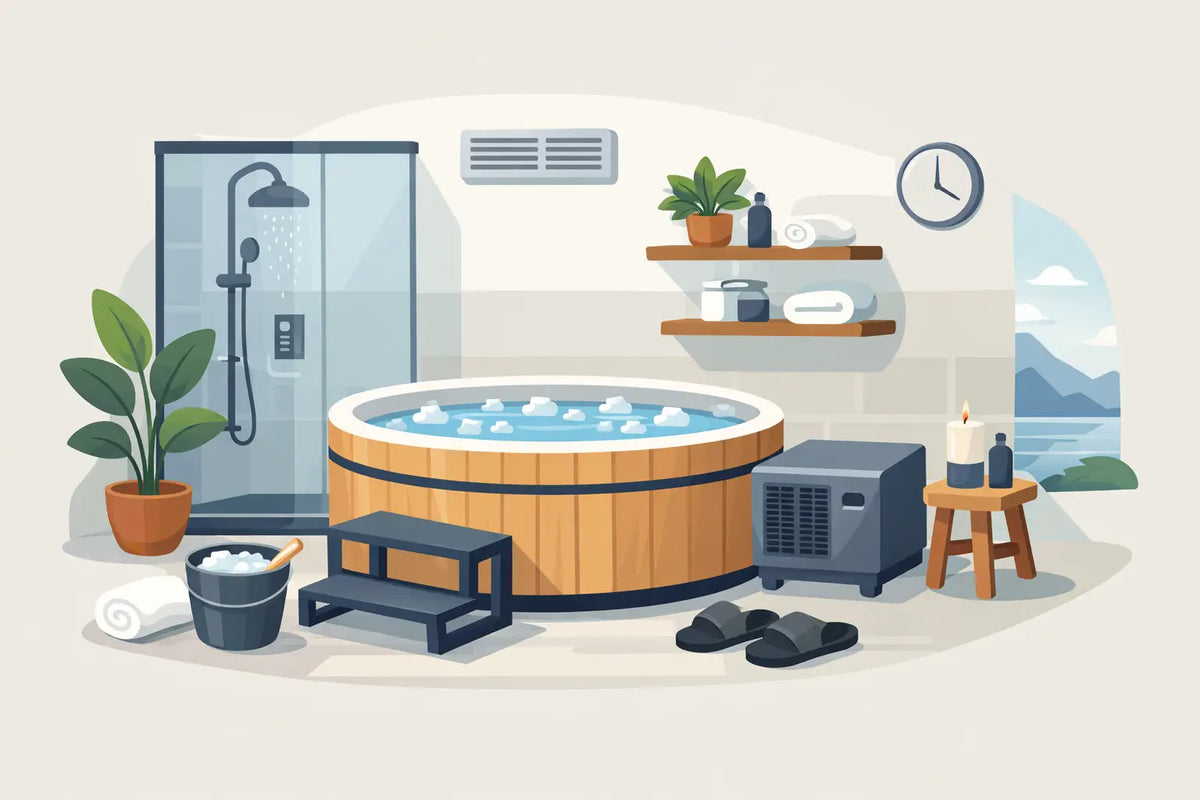
Many advanced cold plunge systems pair chilling with circulation, filtration, and sanitation features. This creates a more complete solution for people who want their plunge available consistently without draining and refilling it after every use. It also helps create a more elevated ownership experience, especially indoors or in a dedicated wellness suite where cleanliness and presentation matter.
Regardless of your setup, clean the tub regularly, follow the recommended water-treatment approach, and replace water as needed. A beautiful recovery space should feel as well maintained as it looks.
Installation, Space, and Climate
Ice is flexible. A basic tub can be placed in many suitable locations with little infrastructure, provided the floor or deck can safely support the filled weight and you have a sensible plan for drainage. This makes ice appealing for renters, seasonal users, and anyone who wants to keep their setup portable.
A chiller requires more planning. You need adequate electrical access, clearance for ventilation, a stable surface, and protection from weather when the equipment is installed outdoors. The system should have enough cooling capacity for the water volume and the ambient conditions. A unit that performs beautifully in a climate-controlled home gym may need more capacity to maintain low temperatures during a Texas summer or in a sun-exposed outdoor location.
Before buying, consider four practical details:
- The filled weight of the tub and whether the intended floor, patio, or deck can support it.
- Available power, outlet requirements, and whether a dedicated circuit is recommended.
- Drainage and access for filling, cleaning, and occasional service.
- The distance between the tub and chiller, plus ventilation and weather protection for the cooling unit.
Who Should Choose Ice?
Ice makes sense for the curious beginner, the occasional user, or the buyer who wants a compact and lower-commitment entry into cold immersion. It is also useful as a temporary solution while you decide where a permanent system belongs in your home.
Choose ice when flexibility matters more than precision. If you travel frequently, use the plunge only after select events, or prefer to spend less initially, the hands-on process may not bother you. Some people even enjoy the ritual of preparing the water. Just be realistic about whether that ritual will still feel appealing in the rain, after a long workday, or during a busy week.
Who Should Choose a Cold Plunge Chiller?
A chiller is designed for people who see cold immersion as a lasting part of their wellness environment. It is particularly well suited to frequent users, competitive athletes, recovery-focused households, luxury home gyms, wellness studios, and training facilities. In these settings, stable temperature, cleaner water management, and immediate availability are not minor upgrades. They shape the quality of the experience.
A chiller also complements a broader recovery space. Paired with a sauna, red light therapy area, or dedicated fitness room, a temperature-controlled plunge feels less like improvised equipment and more like a considered wellness amenity. It can transform unused space into a private recovery destination that supports restoration, focus, and disciplined performance.
The best system is appropriately sized for your tub, climate, and intended use. More power is not always necessary, but underestimating cooling capacity can lead to disappointment. Choose a configuration built to maintain your desired range under the conditions it will actually face.
Make the Choice Based on Your Routine
If cold immersion will be an occasional challenge you use when motivation strikes, ice gives you a simple way to begin. If it will become a nonnegotiable recovery practice, a chiller removes the small obstacles that quietly interrupt consistency.
Think about the version of your life six months from now: the hour you want to use the plunge, the weather outside, the people sharing the space, and how much preparation you are willing to accept. The right cold plunge setup is the one that makes showing up for your recovery feel natural, elevated, and entirely within reach.