
Indoor Cold Plunge Setup Guide for Your Home
A cold plunge belongs where it can become part of the rhythm of your life, not where it creates a daily logistical project. This indoor cold plunge setup guide is designed to help you plan a recovery space that feels composed, performs reliably, and supports the standard of wellness you want at home.
An indoor installation offers privacy, year-round access, and a more intentional experience than an improvised outdoor setup. It also asks for thoughtful decisions before the unit arrives. Water, electricity, flooring, ventilation, access, and the physical weight of a filled plunge all deserve the same attention you would give a premium sauna or a custom home gym.
Start With the Room, Not the Plunge
The most successful indoor cold plunge spaces begin with the room itself. A primary bathroom, dedicated recovery suite, finished basement, private gym, or pool house can all work well. The right choice depends less on square footage alone and more on how the space handles moisture, traffic, and service access.
Choose a location that gives you enough clearance to enter and exit the tub comfortably, remove the cover, and reach the equipment panel when maintenance is needed. A plunge may have a compact footprint, but its chiller, hoses, filters, and cover need room to operate without being crowded against walls or cabinetry. Review the exact product dimensions, including required service clearances, before finalizing placement.
Convenience matters. If a room is too far from where you train, sleep, or shower, even exceptional equipment can become underused. Many homeowners find that a recovery room adjacent to a home gym or primary suite creates the most natural routine. In a commercial setting, a dedicated recovery zone near locker rooms or training areas keeps the experience efficient and polished for members or clients.
Measure the Delivery Path
A beautiful room is not useful if the plunge cannot reach it. Measure every doorway, hallway, stair landing, elevator, gate, and turn between the delivery point and the final location. Account for the product packaging as well as the tub itself.
This is especially relevant for lower-level gyms, narrow urban residences, and upper-floor wellness suites. Confirm delivery logistics early, and decide whether a direct route, a removable door, or professional placement support is required. It is a small planning step that protects a significant investment from last-minute surprises.
Confirm the Floor Can Handle the Load
Water is heavy. A cold plunge filled to its operating level can weigh well over 1,000 pounds once the vessel, water, and occupant are considered. Larger systems can exceed that substantially. That load is usually straightforward on a properly constructed concrete slab, but an upstairs bathroom or elevated wood-framed floor deserves a closer look.
Do not rely on visual judgment alone. For installations on a raised floor, consult a qualified structural professional or contractor who can assess the anticipated load and its distribution. This is particularly wise for luxury remodels, historic homes, and commercial spaces with unknown building details.
The surface under the unit should be level, stable, and water resistant. Tile, sealed concrete, commercial-grade vinyl, and other nonporous surfaces are often practical choices. Hardwood, carpet, and untreated natural materials may look refined, but they are less forgiving if water escapes during entry, cleaning, or draining.
A waterproof membrane, floor pan, or thoughtfully designed mat can provide another layer of protection. Avoid soft foam mats that compress unevenly under substantial weight. The goal is a foundation that feels solid beneath the plunge and remains easy to clean around it.
Plan Power Before Installation Day
Most premium cold plunge systems use a chiller to maintain a consistent water temperature. That delivers a far more convenient experience than hauling bags of ice, but it also means the electrical requirements must be understood in advance.
Check the manufacturer's voltage, amperage, plug type, and dedicated-circuit recommendations for the model you are considering. A standard household outlet may be appropriate for some systems, while others require a dedicated circuit or specific wiring. Because this is equipment operating near water, electrical work should be performed by a licensed electrician and aligned with local code requirements.
Ground-fault circuit interrupter protection is commonly required in wet locations. Do not run a cold plunge on an extension cord unless the manufacturer explicitly permits it. A clean, correctly located outlet improves both safety and the visual finish of the room.
Keep the chiller's airflow requirements in view as well. The mechanical components need open space to release heat. Enclosing a chiller tightly in cabinetry or placing it in an unventilated closet can reduce efficiency and place unnecessary strain on the equipment.
Give Water a Clear Way In and Out
An indoor plunge needs a realistic fill and drain plan. A nearby water source makes initial filling and periodic water changes simpler, whether that is a utility sink, shower connection, or dedicated plumbing arrangement. More importantly, you need to know where water will go when it is time to drain the tub.
A floor drain is the most elegant option for many permanent installations. If one is not available, a nearby shower drain, utility sink, or approved drain connection may work depending on the system and your home's layout. Follow the manufacturer's drainage instructions and local plumbing requirements. Never assume that a small bathroom drain can accept a large volume of water quickly without confirming the setup.
Consider the practical path of the drain hose. It should reach its destination without creating a trip hazard, crossing finished areas, or requiring you to move heavy furniture every time you refresh the water. This is one area where a plumber can turn a good recovery room into a truly effortless one.
Water care also belongs in the plan. Filtration, sanitation approach, water-change frequency, and cleaning procedures differ by model and use level. A household plunge used by one or two people has different maintenance demands than a high-traffic training facility. Choose a system with maintenance requirements that match the attention you are prepared to give it.
Control Humidity and Protect the Surroundings
Cold water can create condensation, particularly in humid climates or rooms with limited air circulation. Splashing, wet feet, and an open lid add more moisture to the environment. Left unmanaged, that moisture can affect paint, millwork, drywall, and nearby equipment.
A bathroom exhaust fan, balanced HVAC, or dedicated dehumidifier can make a meaningful difference. In a dedicated wellness room, aim for ventilation that feels quiet and capable rather than noticeable only after the room becomes damp. Consider moisture-resistant wall finishes and leave sensible distance between the plunge and porous furnishings, electronics, or upholstered seating.
A secure cover is equally valuable. It helps retain temperature, reduces debris, limits evaporation, and creates a more finished appearance when the plunge is not in use. In homes with children or pets, use the cover and any provided safety features consistently.
Design the Experience Around Recovery
Function comes first, but the best indoor plunge rooms do not stop there. The space should encourage you to step away from the pace of the day and return to your routine feeling clear, restored, and ready.
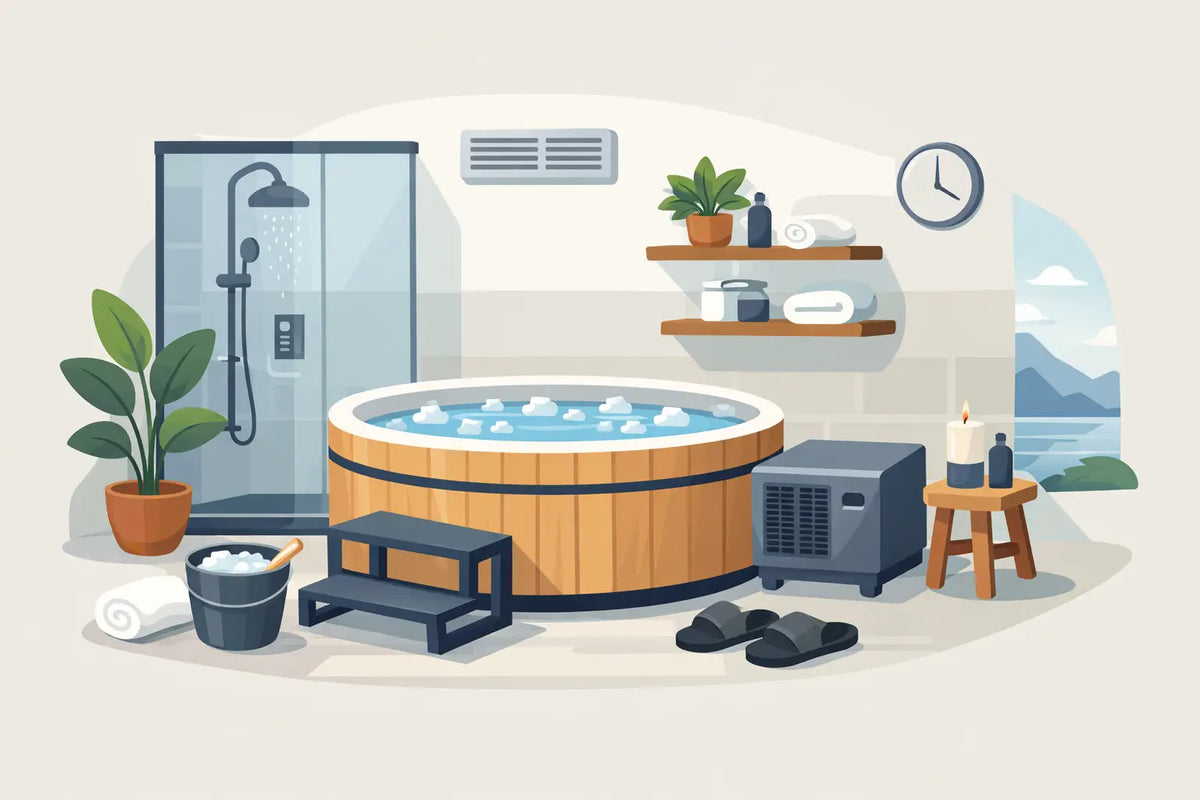
Keep the immediate zone simple: a non-slip mat, clean towel storage, a bench or hook for robes, and soft lighting that is bright enough for safe movement. If the plunge sits in a larger recovery suite, consider how it relates to a sauna, shower, red light therapy area, or mobility space. Alternating heat and cold may suit some wellness routines, while others prefer a focused cold immersion practice. Your layout should support the way you actually recover.
Materials can elevate the setting without making it precious. Stone, wood accents placed outside splash zones, textured tile, and restrained lighting give the room warmth and architectural presence. The plunge remains the focal point, while the surroundings communicate a higher standard of wellness.
Match the System to Your Lifestyle
The right cold plunge is not automatically the largest or coldest model. It is the one that fits your available space, preferred temperature range, maintenance tolerance, and number of users. A compact, self-contained system can be ideal for a private home gym. A larger, durable unit may be the better choice for athletes, families, studios, or performance facilities with repeated daily use.
Think through whether you want a barrel profile, a horizontal tub, integrated steps, an external or built-in chiller, and a particular finish that complements the room. Entry height matters for comfort. So does water capacity, especially for taller users who want full-body immersion. Premium details are worthwhile when they make the ritual more comfortable, consistent, and likely to last.
Before purchasing, gather your room dimensions, photos of the intended location, electrical information, and drainage plan. Corelux Wellness can help translate those details into a system that fits the space and the experience you have in mind.
Build In a Simple Safety Routine
Cold immersion is a personal practice, not a contest. Start with a temperature and duration that feel manageable, enter deliberately, and step out if you experience dizziness, numbness, pain, or unusual discomfort. People with cardiovascular concerns, circulation issues, pregnancy, or other health considerations should speak with a qualified healthcare professional before beginning cold exposure.
Keep floors dry, use non-slip surfaces, and avoid plunging alone if you are new to the practice or testing more intense protocols. For shared facilities, clear operating guidance and regular cleaning standards protect both the equipment and the people who use it.
A well-planned indoor plunge does more than cool the water. It removes friction from recovery, gives your home or facility a distinctive point of purpose, and creates a private place to reset whenever your body and schedule ask for it.