
Article: Infrared Sauna Versus Steam Room for Your Home
Infrared Sauna Versus Steam Room for Your Home
A dedicated heat ritual can change the rhythm of a demanding week. It creates a private place to decompress after training, reset after travel, or simply step away from a full calendar. But when planning that space, the infrared sauna versus steam room decision comes down to more than temperature. The two experiences feel fundamentally different, require different home infrastructure, and suit different recovery preferences.
For a refined home wellness environment, the best choice is the one you will use consistently. That means considering how you respond to heat, where the unit will live, how much humidity your space can accommodate, and whether your priority is athletic recovery, deep relaxation, or both.
Infrared Sauna Versus Steam Room: The Core Difference
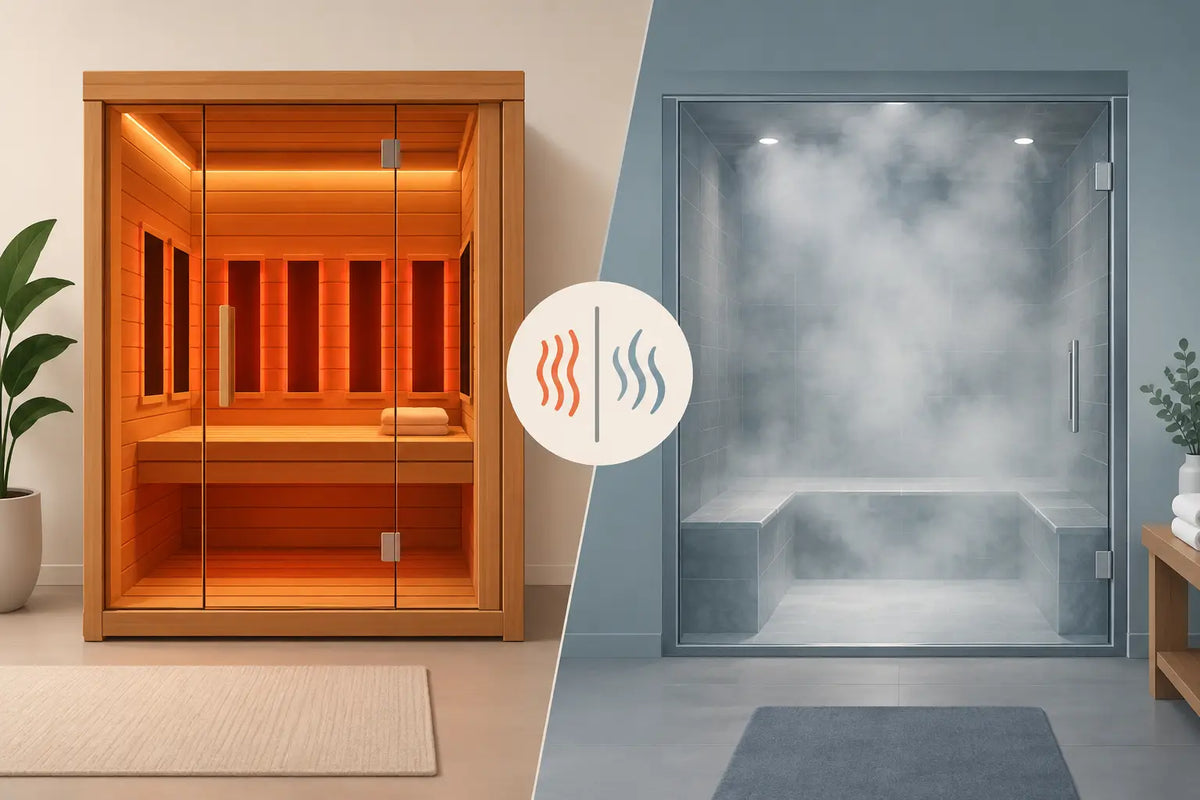
An infrared sauna uses infrared heaters to warm the body more directly while keeping the surrounding air comparatively moderate. Many infrared models operate roughly between 110 and 150 degrees Fahrenheit, though settings vary by product. The air is dry, and the experience is often more approachable for people who find very high ambient heat overwhelming.
A steam room heats water to create dense, humid vapor. Temperatures are usually lower than those in a traditional dry sauna, often around 110 to 120 degrees Fahrenheit, but the near-saturated humidity changes how the heat feels. Steam surrounds the body, makes perspiration less likely to evaporate, and can feel intensely warm within minutes.
Neither format is automatically better. Infrared offers a dry, gentle-feeling heat session with a lower-temperature profile. Steam delivers a more immersive, enveloping warmth and a distinct spa-like atmosphere. The right fit depends on the sensation you prefer and the environment you are prepared to build around it.
How Each Experience Feels
Infrared is quiet, dry, and easy to repeat
For many homeowners, infrared becomes a practical daily ritual because it asks relatively little of the user. Step inside, settle in, and let the cabin warm your body without the heavy air associated with a conventional sauna or steam environment. It is an appealing option after strength training, endurance work, or a long day at a desk, when you want warmth without feeling challenged by extreme heat.
Infrared cabins also tend to complement modern residential spaces. Their clean-lined construction, compact footprints, and dry operation make them a natural addition to a home gym, primary suite, recovery room, or finished basement. Depending on the model and electrical requirements, installation may be more straightforward than a built-in steam room.
That does not mean infrared is a lesser experience. A well-designed cabin can feel deeply restorative, especially when it becomes part of a consistent routine of hydration, mobility work, breathwork, and recovery.
Steam is immersive and sensory
A steam room creates a different kind of retreat. The warm mist, tiled surfaces, and soft visibility can make a session feel like a visit to a luxury spa without leaving home. If you love the sensation of humid heat, steam can be exceptionally calming after a workout or at the end of an intense week.
Many people also appreciate steam when seasonal dryness or congestion makes moist air feel especially comforting. This is a comfort benefit rather than a treatment claim, and individual responses vary. For some, humid heat feels soothing. For others, the density of the air can be uncomfortable or claustrophobic.
Steam is often best suited to someone who wants an architectural wellness feature rather than a standalone piece of equipment. When designed beautifully, it can transform a primary bathroom or dedicated spa suite into a true sanctuary.
Recovery, Relaxation, and Performance Support
Both infrared saunas and steam rooms can support a thoughtful recovery routine by encouraging relaxation, warmth, and a transition out of high-output mode. Heat exposure may help you feel looser after training, while the quiet time itself can support better recovery habits. The key is to avoid treating either option as a substitute for sleep, nutrition, medical care, or sound training programming.
Infrared is frequently favored by athletes and busy professionals because the dry, lower-temperature setting can be easier to tolerate for a 20- to 40-minute session. It is a strong choice for those who want regular heat exposure without needing a full bathroom-style steam installation. The lower operating temperatures can also make infrared more accessible to household members with different heat preferences, though everyone should start conservatively.
Steam may be the more compelling option when relaxation and sensory escape lead the decision. Its humid environment invites you to slow down. A steam session can pair beautifully with a cool shower, an unhurried evening routine, and a bathroom designed for restoration.
For either format, hydrate before and after use, begin with shorter sessions, and leave promptly if you feel dizzy, nauseated, faint, or unwell. People who are pregnant or have cardiovascular, respiratory, blood-pressure, or other health concerns should speak with a qualified clinician before using heated wellness equipment.
The Home Installation Question Matters
The most significant practical difference between an infrared sauna and a steam room is not the heat. It is the room around it.
An infrared sauna is generally a self-contained cabin. You will still need to verify dimensions, electrical needs, floor capacity, ventilation guidance, delivery access, and clearance requirements. Yet it can often be placed in a finished indoor space without the extensive waterproofing required for steam. This makes it particularly attractive for home gyms, guest suites, and recovery rooms where a complete wet-room renovation is not part of the plan.
A steam room is a construction project. It needs a steam generator, plumbing, a properly sealed enclosure, vapor-proofing, drainage, appropriate sloping, ventilation, and moisture-resistant finishes. Controls, lighting, seating, and doors must all be selected with a high-humidity environment in mind. Professional design and installation are not optional details here. They protect the investment and help prevent moisture damage behind walls and under finishes.
Maintenance also follows the same divide. Infrared cabins need regular wipe-downs, attention to manufacturer care guidance, and good airflow. Steam rooms require more ongoing moisture management, cleaning of tiled and grouted surfaces, and periodic care for the generator. If low-maintenance ownership is a priority, infrared has a meaningful advantage.
Which One Belongs in Your Wellness Space?
Choose an infrared sauna if you want a versatile, dry-heat recovery tool that can fit naturally into a home gym or dedicated performance space. It is especially compelling for frequent users who value convenience, a more moderate heat environment, and a refined standalone installation.
Choose a steam room if the goal is to create a fully immersive home spa. It makes sense when you are already renovating a bathroom, building a luxury wellness suite, or designing a hospitality-level experience for a training facility, studio, or private residence. The investment in construction is greater, but so is the architectural impact.
There is also a third path for larger projects: build a recovery suite with distinct zones. An infrared sauna can serve the daily performance ritual, while a steam room supports slower, more sensory restoration. Add a cold plunge or contrast shower, and the space becomes more than a collection of equipment. It becomes a personal system for recovery and reset.
At Corelux Wellness, fit guidance should start with the life you intend to lead in the space, not just a product specification sheet. Consider who will use it, how often, where it will be installed, and what kind of heat makes you feel your best.
The finest wellness investment is not the one with the most features. It is the one that makes restoration feel close, effortless, and worth returning to tomorrow.