
How to Choose a Sauna Heater for Your Space
A sauna can have beautiful woodwork, thoughtful lighting, and a perfect view, yet the experience will still fall short if the heat feels weak, uneven, or difficult to control. To choose a sauna heater well, start with the room itself: its finished interior volume, insulation, materials, intended use, and available power. The right heater turns a well-designed sauna into a dependable ritual for restoration, relaxation, and performance support.
Start With the Sauna Room, Not the Heater
Heater selection begins after the sauna layout is defined. Measure the interior width, depth, and height, then multiply those dimensions to find the cubic footage. This is the baseline figure manufacturers use to recommend heater capacity.
However, raw room volume does not tell the whole story. A compact sauna with insulated walls and a solid, well-sealed door holds heat far more efficiently than a similarly sized room with large glass panels, masonry surfaces, or other uninsulated materials. Glass and stone absorb heat, increasing the load on the heater and extending warm-up time.
As a practical planning rule, add approximately one cubic foot of effective sauna volume for every square foot of uninsulated glass, stone, tile, or concrete. A sauna with a full glass front may need significantly more heater capacity than an all-cedar room of the same physical dimensions. When in doubt, it is usually wiser to select within the upper end of a manufacturer’s recommended room-size range, rather than undersize the system.
A heater that is too small often runs continuously, struggles to reach the desired temperature, and can feel disappointing during colder months. One that is dramatically oversized can heat the room too aggressively, cycle more often, and make fine temperature control less satisfying. Precision matters more than simply choosing the largest model.
Choose a Sauna Heater Around Your Heat Style
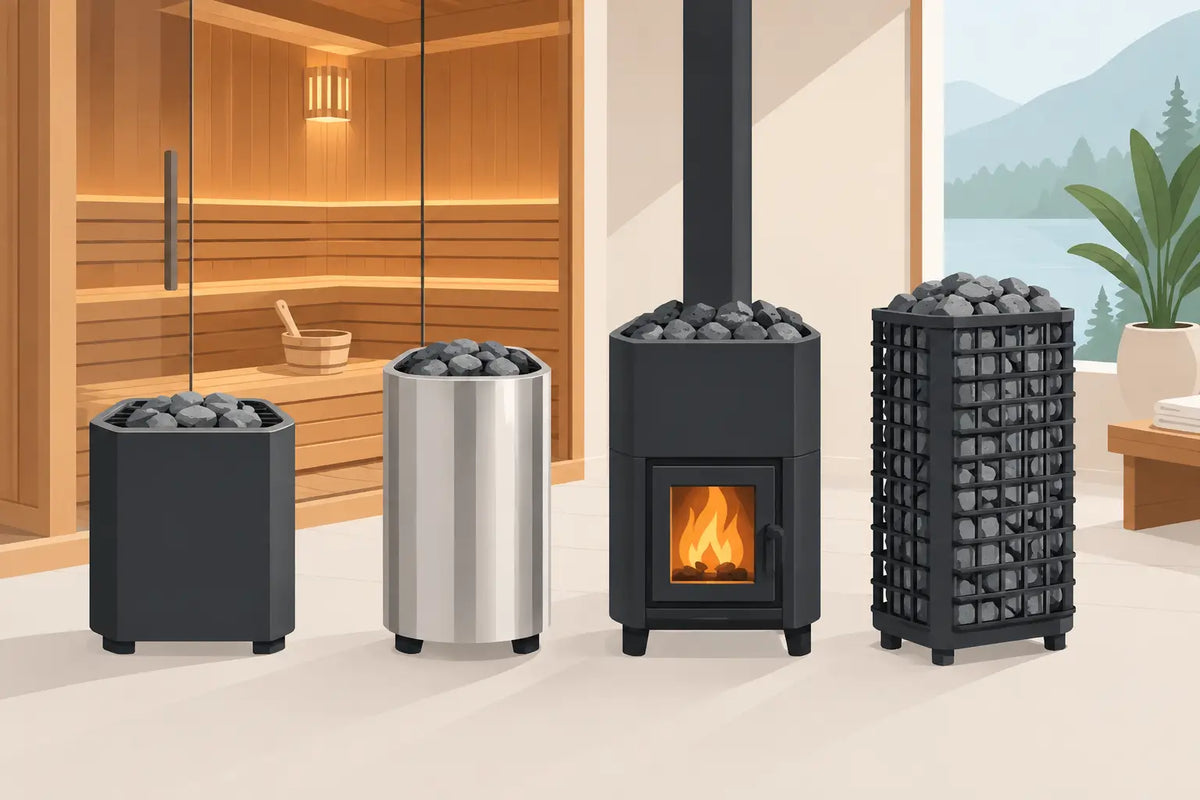
Traditional sauna heaters create the dry, enveloping heat many people picture when they imagine a classic sauna. Heated stones are central to the experience. Pouring water over them produces a brief, comfortable rise in humidity known as löyly, allowing you to shape the feel of each session.
For a residential wellness sanctuary, an electric sauna heater is often the most practical choice. It offers clean operation, predictable performance, and convenient control options without the need for a chimney or ongoing fire management. Electric heaters are especially well suited to indoor installations, primary homes, and premium recovery spaces where ease of use matters as much as atmosphere.
Wood-burning heaters deliver a more elemental ritual. The scent of wood, visible flame, and slower progression of heat can make them exceptional for outdoor barrel saunas, lake properties, and off-grid settings. The trade-off is greater installation complexity. They require proper clearances, a suitable chimney system, ventilation, fuel storage, and more hands-on attention during each use.
The best choice depends on what you want the sauna to become. If you value a ready-on-demand session after training or before bed, electric heat is difficult to beat. If your sauna is part of a slower weekend routine in an outdoor setting, wood-fired heat can offer a distinctly memorable experience.
Electrical Capacity and Installation Deserve Early Attention
A premium heater is only as reliable as the infrastructure supporting it. Before purchasing an electric model, confirm your home or facility has the required voltage, dedicated circuit capacity, and panel space. Many larger traditional sauna heaters require 240-volt service and professional hardwiring. Do not assume an existing outlet can support the heater.
Installation requirements vary by model and local code, but a qualified electrician should verify the circuit, breaker, wire gauge, disconnect requirements, and control placement. This is particularly important when the sauna is part of a new gym, spa, guest suite, or garage conversion, where electrical loads may already be substantial.
Heater location also affects safety and comfort. Manufacturers specify minimum clearances from walls, benches, railings, and ceilings. These dimensions are not aesthetic suggestions. They protect surrounding materials, allow air to circulate correctly, and preserve the heater’s intended performance.
For commercial or high-use environments, consider how often the heater will run and who will operate it. A model that suits a two-person home sauna may not be the right fit for a busy training facility with back-to-back sessions. Higher use calls for durable components, appropriately sized capacity, and controls that are intuitive for staff and guests.
Evaluate Stone Capacity, Construction, and Controls
Two heaters with similar kilowatt ratings can create noticeably different sauna experiences. Stone capacity is one reason why. A heater designed to hold more stones generally provides softer, more stable radiant heat and a more satisfying response when water is ladled over the rocks. It may also retain warmth better between cycles.
A smaller stone compartment can still be an excellent fit for a compact sauna or for those who prefer faster warm-up times. Yet for many luxury home installations, generous stone volume contributes to the fuller, more traditional experience people expect from a premium sauna.
Construction quality matters, too. Look for corrosion-resistant materials, thoughtful airflow design, serviceable heating elements, and a stone basket built to support proper heat circulation. In humid sauna conditions, details that are easy to overlook at purchase become meaningful over years of ownership.
Controls deserve equal consideration. Built-in controls can be straightforward and economical, while wall-mounted digital controls create a more polished experience and are often easier to access from outside the sauna. Some systems offer delayed starts, programmable session times, lighting integration, and remote-ready capability. These features are useful when they simplify your routine, not when they add complexity you will never use.
For a home focused on recovery, a timer that lets the sauna begin warming before a workout ends may be genuinely valuable. For a commercial setting, external controls can provide better oversight and help prevent unnecessary run time. Always follow the manufacturer’s guidance for safe remote operation and never treat automation as a substitute for responsible supervision.
Consider Warm-Up Time and Your Real Routine
A sauna heater should fit the way you actually live. Most traditional saunas need time to reach operating temperature, commonly around 30 to 60 minutes depending on room size, ambient conditions, insulation, and heater capacity. Outdoor saunas in colder climates may take longer.
If your ideal sauna session happens immediately after an early-morning training session, prioritize capacity, efficient insulation, and convenient controls. If your sauna will be used as an evening wind-down ritual, a longer warm-up may feel less consequential. The right decision is not about chasing the fastest number. It is about creating a routine that feels effortless enough to maintain.
Also think beyond one person. A heater sized for a single occupant may technically heat a larger room, but it can feel underpowered when family members, teammates, or guests join the session. Consider how many people will use the space at once, how frequently it will be used, and whether the sauna is intended as a private retreat or a shared wellness feature.
Ventilation Is Part of Heater Performance
A sauna needs thoughtful ventilation to feel fresh and heat evenly. Fresh-air intake and exhaust placement influence how heat moves through the room, how quickly the space dries after use, and how comfortable the benches feel from floor to ceiling.
Poor ventilation can leave the upper bench uncomfortably hot while lower areas remain cool, or make the room feel stale during longer sessions. Follow the sauna and heater manufacturer’s ventilation guidance rather than relying on a generic layout. Heater position, room geometry, and whether the sauna is indoors or outdoors all influence the best approach.
Proper ventilation also supports the longevity of the sauna itself. A room that dries efficiently after each session is better positioned to preserve its wood surfaces and maintain the refined appearance expected of a high-quality installation.
Budget for the Complete Sauna System
The heater is a central investment, but it is not the entire budget. Electrical work, controls, stones, ventilation, protective railing, installation labor, and any required upgrades to the room all contribute to the finished cost. Wood-burning systems add chimney components and exterior safety considerations.
Choosing a less expensive heater without accounting for these requirements can create unwelcome compromises later. A well-planned system delivers more than heat. It gives you consistent sessions, confident operation, and a space that supports your wellness goals for years.
At Corelux Wellness, the most successful sauna projects begin with a clear picture of the room and the routine it will serve. Bring together your sauna dimensions, material choices, electrical details, and desired experience before making a final selection. That preparation makes it easier to choose a sauna heater that feels less like a utility purchase and more like the reliable heart of your personal recovery space.